
2026 LAD Early Career Award Goes to Gabi Wenzel
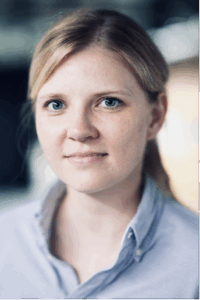
The Laboratory Astrophysics Division (LAD) of the American Astronomical Society (AAS) is presenting its 2026 Early Career Award to Dr. Gabi Wenzel of the Massachusetts Institute of Technology and the Center for Astrophysics | Harvard & Smithsonian. The award recognizes her transformative discoveries of polycyclic aromatic hydrocarbon molecules in the interstellar medium through high resolution microwave spectroscopy and radioastronomical observations.
The LAD Early Career Award is given to an individual who has made significant contributions to the field within 10 years of receiving their Ph.D. Dr. Wenzel has already established herself as an exceptional experimental physicist and astrochemist whose research bridges laboratory spectroscopy, observational astronomy, and molecular astrophysics. Her work focuses on understanding the cosmic carbon cycle through the study of polycyclic aromatic hydrocarbons (PAHs), complex molecules that are pollutants on Earth but play multiple key roles in the interstellar medium. By building and operating state-of-the-art broadband chirped-pulse and cavity-enhanced Fourier transform microwave spectrometers, she has enabled the first unambiguous interstellar detections of specific PAHs, radio astronomical discoveries that have reshaped our view of molecular complexity in the coldest regions of the galaxy.
Dr. Wenzel’s career is deeply interdisciplinary: she studied physics at the University of Münster, Germany, earned her PhD in laboratory astrophysics at the University of Toulouse within the EUROPAH network, and pursued postdoctoral work at Aarhus University’s Center for Interstellar Catalysis. She is currently a Research Scientist in the Department of Chemistry at the Massachusetts Institute of Technology and a Visiting Scientist at the Center for Astrophysics | Harvard & Smithsonian. Her research now links laboratory experiments with astronomical surveys such as GOTHAM, advancing our understanding of how carbon-rich molecules form, survive, and transform from interstellar clouds to planetary systems.
Beyond her research, she is committed to community building and outreach. She has co-organized international meetings, mentored students across multiple institutions, and contributed to science outreach programs for children and young adults. These efforts reflect her dedication to making science accessible while training the next generation of laboratory astrophysicists and astrochemists to explore the molecular complexity of the universe.
The LAD Early Career Award includes a cash award, a framed certificate, and an invited lecture by the recipient at a meeting of the Laboratory Astrophysics Division.
Contacts:
Stefanie N. Milam
LAD Past Chair
NASA Goddard Space Flight Center
+1 (240) 419-1796
Dennis Bodewits
LAD Secretary
Department of Physics
Auburn University
+1 (334) 844-4274
Catherine M. Deibel
LAD Executive Committee Member-At-Large
Department of Physics & Astronomy
Louisiana State University
+1 (225) 578-4950
Gabi Wenzel
Research Scientist
Department of Chemistry, Massachusetts Institute of Technology
Visiting Scientist
Center for Astrophysics | Harvard & Smithsonian
+1 (617) 252-1975
The AAS Laboratory Astrophysics Division (LAD) advances our understanding of the Universe through the promotion of fundamental theoretical and experimental research into the underlying processes that drive the cosmos, in collaboration with astronomical observations and other complementary fields.
The American Astronomical Society (AAS), established in 1899 and based in Washington, DC, is the major organization of professional astronomers in North America. The mission of the AAS is to enhance and share humanity’s scientific understanding of the universe.