
2026 LAD Laboratory Astrophysics Prize Goes to Daniel W. Savin
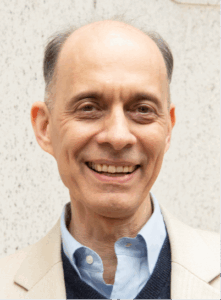
The Laboratory Astrophysics Division (LAD) of the American Astronomical Society (AAS) is awarding its 2026 LaboratoryAstrophysics Prize to Dr. Daniel W. Savin of Columbia University and the American Museum of Natural History. The award recognizes his contributions to studies in X-ray astrophysics and early Universe star formation and for his extensive service to the laboratory astrophysics community.
The Laboratory Astrophysics Prize, LAD’s highest honor, is given to an individual who has made significant contributions to laboratory astrophysics over an extended period of time. For over three decades, Dr. Savin has been a leading figure in the laboratory astrophysics community. Two of his most impactful research projects relate to X-ray astronomy and early Universe chemistry.
Dr. Savin led a 21-years-long project measuring dielectronic recombination, the dominant electron-ion recombination process for most atomic ions in astrophysical plasmas. This NASA-supported work was performed using the Test Storage Ring at the Max Planck Institute for Nuclear Physics in Heidelberg, Germany. These measurements, and the theoretical calculations they stimulated, dramatically improved the charge state distribution calculations used to interpret and model cosmic X-ray spectra.
Dr. Savin’s early Universe chemical research began by identifying the associative detachment process H– + H → H2 + e– as being the key reaction requiring improved chemical kinetics data. With NSF support, he and his group designed and constructed a novel apparatus to measure this reaction. They reduced the previous order-of-magnitude uncertainty in the rate coefficient to a one-sigma level of ~ 25%, removing a significant chemical uncertainty from models of primordial galaxy and first star formation.
As a mentor, Dr. Savin has an extensive track record. Of his many mentees, over 90% have continued to the next step toward developing a career in STEM (science, technology, engineering, and mathematics). Five have gone on to form and lead their own laboratory astrophysics groups.
For over 25 years, Dr. Savin has been actively involved in professional community service. He has been invited by five different National Academy of Science committees to report on laboratory astrophysics. Since 2017, he has been the Laboratory Astrophysics Science Editor for the AAS Journals. He was a founding member of the AAS Working Group on Laboratory Astrophysics (WGLA) and served on the WGLA leadership for the five years of its existence, leading to the creation of the AAS Laboratory Astrophysics Division. Dr. Savin served on the LAD Steering Committee for its inaugural year and as Secretary from 2013-2019.
Dr. Savin received his B.A. in Physics from Columbia University and his M.A. and Ph.D., both in Physics, from Harvard University. He was a Postgraduate Research Physicist at the University of California at Berkeley. He then became an Associate Research Scientist at the Columbia Astrophysics Laboratory, where he is now a Senior Research Scientist. Dr. Savin is a Fellow of the American Association for the Advancement of Science, the American Physical Society, and the AAS.
The LAD Career Prize includes a cash award, a framed certificate, and an invited lecture by the recipient at a meeting of the Laboratory Astrophysics Division.
Contacts:
Stefanie N. Milam
LAD Past Chair
NASA Goddard Space Flight Center
+1 (240) 419-1796
Dennis Bodewits
LAD Secretary
Department of Physics
Auburn University
+1 (334) 844-4274
Catherine M. Deibel
LAD Executive Committee Member-At-Large
Department of Physics & Astronomy
Louisiana State University
+1 (225) 578-4950
Daniel W. Savin
Senior Research Scientist
Astrophysics Laboratory, Columbia University
American Museum of Natural History
The AAS Laboratory Astrophysics Division (LAD) advances our understanding of the Universe through the promotion of fundamental theoretical and experimental research into the underlying processes that drive the cosmos, in collaboration with astronomical observations and other complementary fields.
The American Astronomical Society (AAS), established in 1899 and based in Washington, DC, is the major organization of professional astronomers in North America. The mission of the AAS is to enhance and share humanity’s scientific understanding of the universe.