
2025 LAD Dissertation Prize Goes to Yang Zhang
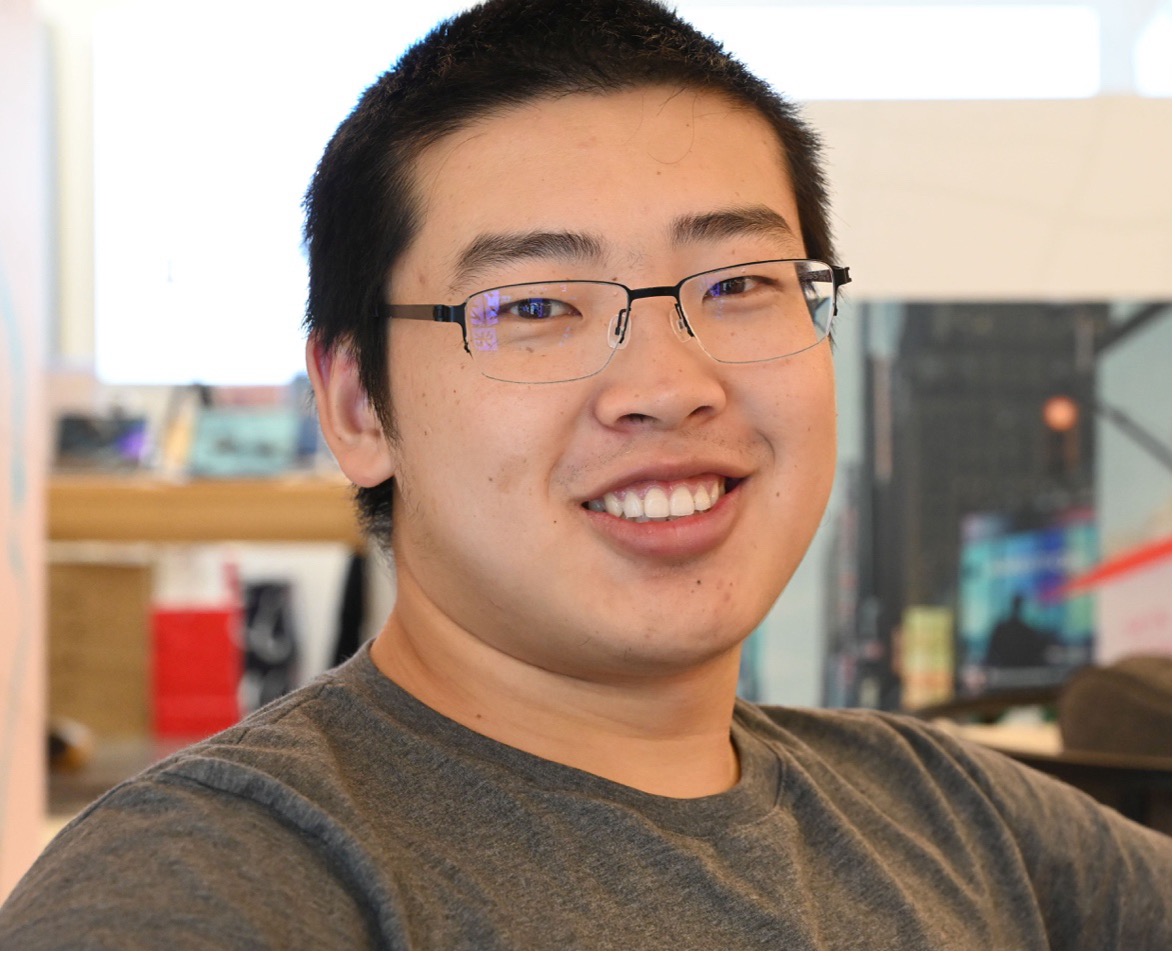
The Laboratory Astrophysics Division (LAD) of the American Astronomical Society (AAS) is pleased to announce the recipient of its 2025 Dissertation Prize, given to an individual who has recently completed an outstanding theoretical or experimental doctoral dissertation in laboratory astrophysics. For the year 2025 the prize goes to Dr. Yang Zhang for his thesis Understanding the Plasma Universe through Laboratory Experiments and Related Models. Dr. Zhang earned his PhD at the California Institute of Technology, working with Professor Paul M. Bellan. He is now a NASA Jack Eddy Postdoctoral Fellow jointly appointed at Princeton University and the University Corporation for Atmospheric Research (UCAR).
Dr. Zhang is being cited for “laboratory experiments where MHD instabilities couple to non-MHD physics that then produce hard X-rays, thereby demonstrating a credible mechanism for production of energetic particles as observed in many astrophysical contexts; he is additionally recognized for using a numerical simulation inspired by laboratory experiments to show that collisions between charged and neutral particles produce angular momentum transport in accretion disks”. His thesis work addresses two foundational challenges in astrophysics: understanding the mechanisms behind solar flare generation and resolving the angular momentum transport in accretion disks.
By combining laboratory experiments, theoretical modeling, and numerical simulations, Dr. Zhang’s work has advanced the study of plasma dynamics across scales, revealing critical insights into solar and astrophysical phenomena. In one of his experiments, he successfully replicated braided solar loop structures in the laboratory and discovered cross-scale coupling between MHD instabilities and non-MHD physics. This coupling led to the production of hard X-rays in the keV range from plasma with initial temperatures of only 2 eV, offering a compelling mechanism for energetic particle acceleration and X-ray generation on the Sun and in other astrophysical settings. He also developed a first-principles model demonstrating that collisions between neutral and charged particles can efficiently transport angular momentum in accretion disks — providing a fundamentally new perspective on a decades-old astrophysical puzzle. He also proposed a model of braided magnetic flux ropes that explains the braided magnetic structures seen in both laboratory plasmas and astrophysical systems, including the double helix nebula and helical jets. His research has been published in Nature Astronomy and The Astrophysical Journal Letters, highlighted by the National Science Foundation, and widely featured in the popular press.
The LAD Dissertation Prize includes a cash award, a framed certificate, and an invited lecture at a meeting of the Laboratory Astrophysics Division.
Contacts:
Murthy S. Gudipati
LAD Past Chair
Jet Propulsion Laboratory, California Institute of Technology
+1 (818) 536-9028
[email protected]
Rachel L. Smith
LAD Secretary
NC Museum of Natural Sciences / Appalachian State University
+1 (919) 707-8239
[email protected]
Yang Zhang
Department of Astrophysical Sciences
Princeton University
Peyton Hall, 4 Ivy Lane, Princeton, NJ 08544
[email protected]
The AAS Laboratory Astrophysics Division (LAD, https://lad.aas.org) is a multi-disciplinary division that encompasses experimental and theoretical research, and related observational astronomy and planetary science, with the objective of advancing our understanding of the fundamental processes that drive the Universe.
The American Astronomical Society (AAS, https://aas.org), established in 1899 is a major international organization of professional astronomers, astronomy educators, and amateur astronomers. The mission of the AAS is to enhance and share humanity’s scientific understanding of the universe as a diverse and inclusive astronomical community, which it achieves through publishing, meetings, science advocacy, education and outreach, and training and professional development.